Email is useful for communication. It is not always a
sales system.
When quotations are created in documents, exported as
PDFs, sent from a personal inbox, and followed up through memory, the business
may lose visibility at every stage. A prospect may have received an outdated
price. A manager may not know which proposal was approved. A sales
representative may be working from a different product list than the one used
by another member of the team.
The problem is not that Gmail is a bad tool. The problem
is that the quotation process has become too important to operate without
structure.
A quotation is more than an attachment
A quotation is part of a commercial workflow. It begins
with a customer requirement and may involve product selection, pricing, tax,
discounts, delivery terms, approvals, revisions, and follow-up. Once the
customer accepts, the information may need to become an order, invoice,
project, or service request.
If every stage is disconnected, the team spends time
rechecking details. That creates delay and increases the chance of avoidable
mistakes.
Quotation management software
helps create a consistent path from opportunity to proposal to decision. The
exact features depend on the business, but a useful system may include customer
records, reusable items, pricing rules, approval steps, version control,
proposal templates, status tracking, reminders, and reporting.
Signs your quotation process needs attention
A sales workflow may need improvement when quotations are
stored in individual inboxes, nobody knows which version is current, follow-up
depends on personal reminders, discounts require informal approval, or accepted
quotations have to be entered again into another system.
Another warning sign is the inability to answer basic
questions: How many open quotations do we have? Which proposals are waiting for
approval? Which customers have not responded? What is the average time between
enquiry and quotation? Which service or product combinations are most
frequently proposed?
Without this visibility, management is judging sales
activity from conversations rather than evidence.
The right process is usually simple
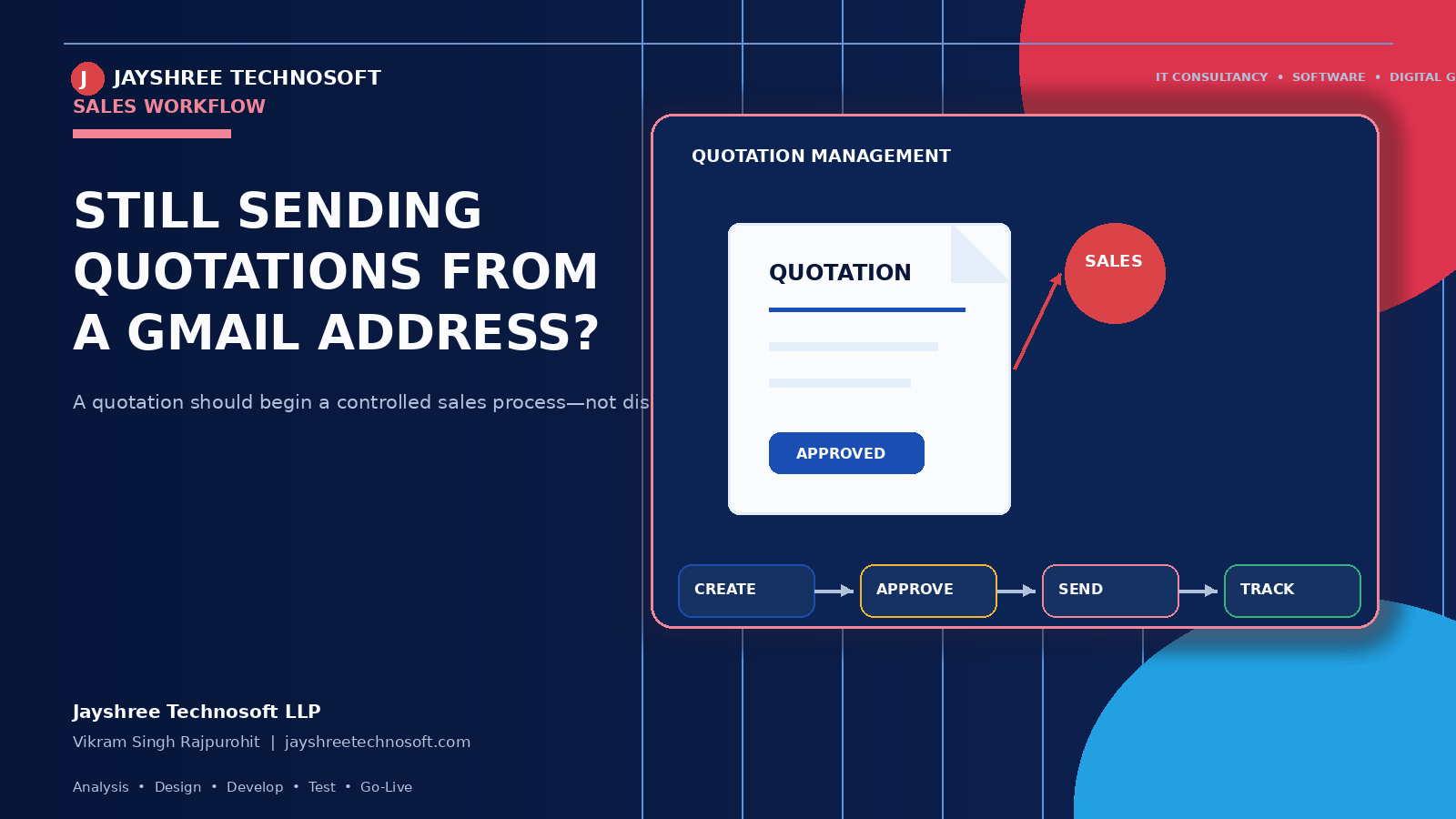
A practical quotation workflow can follow five stages:
1
Create: Capture the
customer requirement and select the correct products or services.
2
Review: Apply pricing,
discount, tax, and approval rules.
3
Send: Deliver a
professional, trackable quotation through the agreed channel.
4
Follow up: Record
questions, revisions, reminders, and customer responses.
5
Convert: Turn an accepted
quotation into an order, invoice, project, or implementation task.
The purpose is not to add bureaucracy. It is to make
responsibility and status visible.
Where IT consultancy adds value
Businesses often jump directly to software selection. A
better approach is to review the sales process first. What information does the
salesperson need? Which fields are mandatory? Who approves a discount? How does
the business handle multiple currencies, service packages, or recurring work?
What happens when a proposal changes after it has been sent?
The answers determine whether the company needs a CRM
quotation module, a custom quotation application, an integration between
existing systems, or a simpler process redesign.
Jayshree Technosoft’s public service positioning includes
business consulting, custom web applications, process automation, digital
marketing, and scalable support.[1] Its methodology starts with analysis and
planning before design and development.[2] That is particularly relevant to
quotation systems because the best result depends on understanding the business
rules behind the document.
Professional does not mean complicated
A professional quotation system should make it easier for
a customer to understand the offer and easier for the sales team to manage the
next step. It should support clear pricing, consistent terms, reliable contact
information, and a simple approval path.
The system should also make it easier to learn. Which
proposals are delayed? Where do prospects ask for clarification? Which products
are frequently revised? Which sales stages produce the most accepted business?
These insights can improve the offer itself, not only the
software used to send it.
Start with one workflow
You do not need to automate every sales activity on day
one. Select one quotation type, define the stages, create the template, connect
the customer record, and test the workflow with real examples. Then expand once
the process is working.
If your team is still searching email threads to
understand the status of a proposal, the problem is ready for a systems review.
A quotation should start a controlled sales process, not
disappear into an inbox.
CTA: Ask Jayshree Technosoft to review your current quotation process and recommend a practical CRM, automation, or custom-software approach.
Recent Articles

Best CRM Software in Jaipur for Kirana Stores: How POS Billing CRM Simplifies Daily Operations

How DataBridgeCRM's Real Estate CRM Works, From First Enquiry to Closed Deal

How LawDesk & CADesk Work for Lawyers and Chartered Accountants
